
“Only 1 Room Left!” What Booking-Site Pressure Tactics Really Mean, and How to Shop Calmly
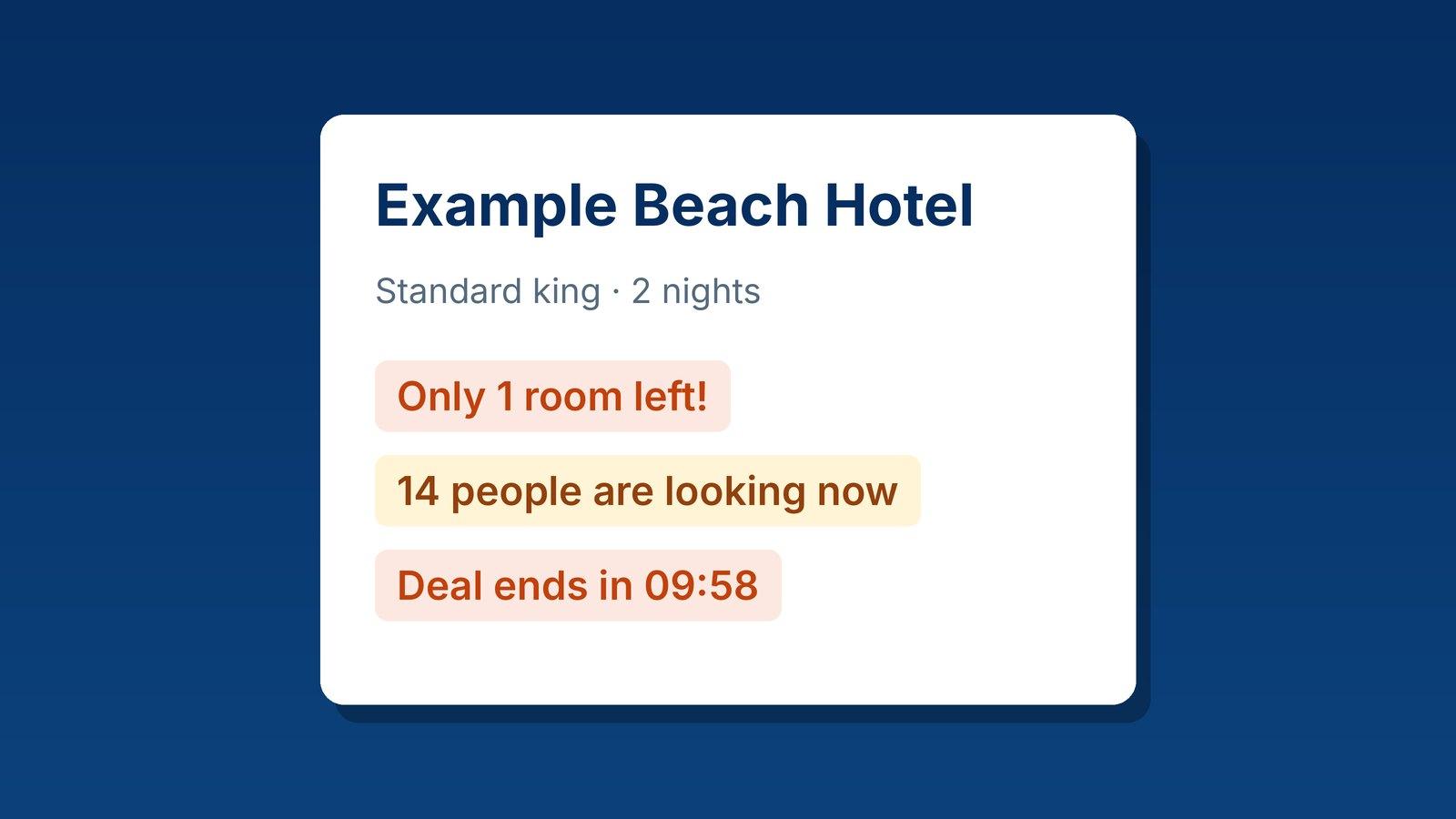
“Only 1 room left.” “14 people are looking at this hotel.” “Deal ends in 9 minutes.” These messages exist for one reason: to make you book now instead of comparing. Sometimes they’re true. But regulators who looked closely found enough misleading versions that several of the biggest booking sites agreed to change how they use them.
Here is what investigators found, what the messages usually mean, and how to book on your own schedule.
The short version
- Scarcity messages can be narrow. “Only 1 room left” may mean one room at that price or on that site, not in the whole hotel.
- The top result isn’t always the cheapest. An Australian court found Trivago’s top offer was steered by which booking site paid it most.
- “Discounts” can compare apples to oranges, like a standard room against a suite, or a weekday rate against a weekend one.
- The fix is simple: compare totals, check the hotel’s own site, and book refundable if you need time.
What regulators found
United Kingdom, 2019. After an investigation, the Competition and Markets Authority said in February 2019 that Expedia, Booking.com, Agoda, Hotels.com, ebookers and trivago had agreed to change their practices by September 1, 2019. They committed to make clear how hotels are ranked, including when results are affected by the commission a hotel pays; not to give a false impression of a hotel’s availability or popularity; to promote only deals actually available at the time; and to show the total price up front. The CMA said some sites had strategically placed sold-out hotels in search results. It noted that not every firm used every practice, made no finding that the law was broken, and said the commitments were not an admission. In September 2019, 25 more companies, including Airbnb, Google, Hilton, Marriott, IHG, Kayak, TripAdvisor and Trip.com, signed up to the same principles.
Spot checks that followed. In September 2019, the UK consumer group Which? tested the six original sites. In its small sample, 5 of 10 Booking.com “only X rooms left on our site” claims didn’t give an accurate picture of availability. In one example at a London hotel, the results page said one room of a type was left, while the booking page showed ten cheaper rooms of the same type. Booking.com told Which? it had worked hard to implement its commitments.
European Union, 2019 and 2020. After action by European consumer authorities, Booking.com (in late 2019) and Expedia (in 2020) agreed to show when results rank higher because a provider paid for it, include all unavoidable costs in the total price, stop suggesting artificial scarcity, and present only genuine deals and discounts, according to the Netherlands’ consumer authority.
Australia, 2022. In the biggest penalty we found, Australia’s Federal Court ordered Trivago to pay A$44.7 million in penalties in April 2022, after finding in 2020 that it misled consumers. The court found Trivago’s algorithm put significant weight on which booking site paid it the highest fee per click, so it often didn’t highlight the cheapest rate. Trivago’s own data showed a higher-priced rate was chosen as the top offer in 66.8% of listings. It also used strikethrough prices that often compared a standard room with a luxury room at the same hotel.
What the common messages usually mean
- “Only 1 room left”: read it as “one left at this price, on this site.” Other room types, other rates and the hotel’s own website may still have plenty.
- “14 people are looking”: interest is not a booking. Popular dates do sell out, but a viewer count tells you little about your odds.
- Countdown timers: ask what actually ends. If it’s a refundable rate, booking it to hold the room costs you nothing while you compare.
- Strikethrough “was” prices: check what’s being compared. Same room, same dates, same cancellation terms, or it isn’t a real discount.
- “Recommended” or “top pick” sorting: rankings can reflect commissions or ad fees. Sort by price or distance yourself.
How to book without being rushed
- Book refundable when you need time. A free-cancellation rate holds the room while you keep comparing. Note the cancellation deadline.
- Check the hotel’s own site. If a booking site says one room is left, look at the hotel directly, signed in as a member if it has a program. We explain why in book direct or through Expedia?
- Compare total to total. U.S. hotels must now show the full price, resort fees included, up front. See our resort fees guide.
- Sort by price, not by “recommended.” It takes paid placement out of the picture.
- Screenshot anything that looks wrong. If a “discount” or scarcity claim turns out to be false, a screenshot helps when you ask for a fix or file a complaint.
For families and groups
Pressure tactics hit hardest when you need several rooms on the same dates, because one “sold out” message can feel like the whole trip is at risk. The calmer route is to hold refundable rooms early and keep comparing, or let someone check availability directly with the hotel. If you’re planning a group stay, tell us about it. There is no planning fee for standard trips; suppliers pay us when you book. For why prices shift from search to search, see what AI pricing really does.
Sources
- UK Competition and Markets Authority, Hotel booking sites to make major changes after CMA probe, February 6, 2019; Major overhaul of hotel booking sector after CMA action, September 13, 2019.
- Which?, Booking.com still misleading holidaymakers with “1 room left” claims, September 19, 2019.
- Netherlands Authority for Consumers and Markets, Booking and Expedia inform consumers more clearly about their offers, December 18, 2020; European Commission, accommodation booking coordinated actions.
- Australian Competition and Consumer Commission, Trivago to pay $44.7 million in penalties for misleading consumers over hotel room rates, April 22, 2022.