
Resort Fees Now Have to Be in the First Hotel Price You See. Here’s How to Check
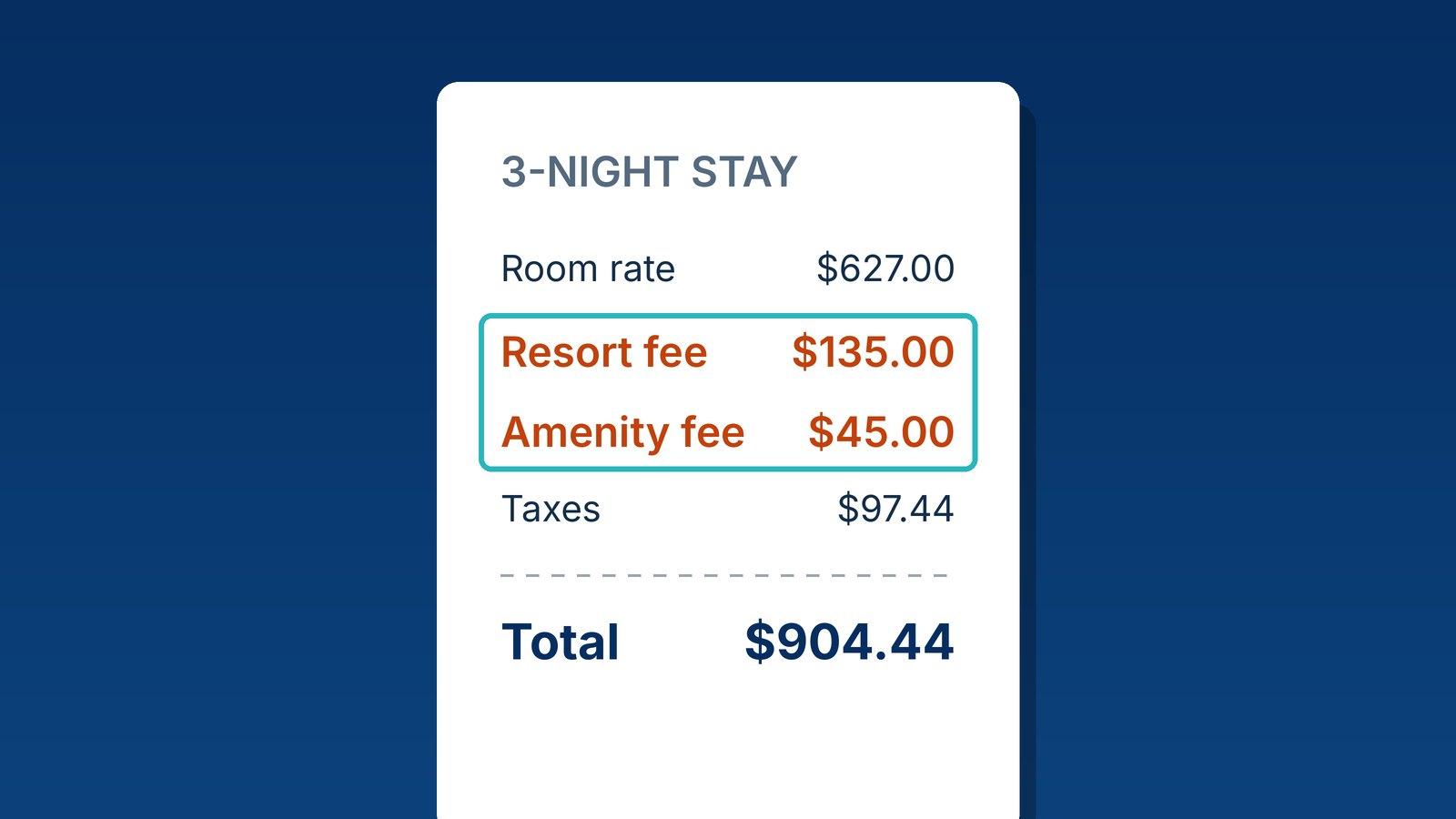
For years the trick was simple: show a low nightly rate, then add a “resort fee” or “amenity fee” at the last step, or at the front desk. Since May 12, 2025, that is no longer allowed in the U.S. A federal rule now says the first price you see for a hotel or vacation rental has to be the full price, mandatory fees included. Taxes can still come later, and airfare plays by different rules.
Here is what the rule covers, what it doesn’t, and how to check a price in about a minute.
The short version
- Hotels and rentals must lead with the total. The FTC’s Rule on Unfair or Deceptive Fees requires the total price, resort fees included, to be the most prominent price.
- Only three things can be added later: government taxes and charges, shipping, and optional extras you choose. All of them must appear before you pay.
- Airfare is different. Advertised fares must include taxes, but bag and seat fees can still sit outside the first price. A stronger rule was thrown out in court in 2026.
- Some states go further. California has required mandatory fees in advertised prices since July 2024, and several states have passed broad all-in pricing laws since.
- If a fee still surprises you, screenshot it, ask the hotel to remove it, and report it.
What the FTC rule requires
The FTC’s Rule on Unfair or Deceptive Fees took effect May 12, 2025. It covers live-event tickets and short-term lodging, which the FTC describes as temporary sleeping accommodations at a hotel, motel, inn, short-term rental, vacation rental or other place of lodging. Its guidance says that includes home shares and vacation rentals offered through platforms like Airbnb and VRBO.
The core rule: when a business shows a price, it must show the total price, and display it more prominently than any other pricing information. The FTC’s own example is a hotel with a mandatory resort fee of $39 per day: that fee belongs in the total, not in the fine print. Businesses that break the rule can be ordered to refund consumers and pay civil penalties.
In April 2026 the FTC announced a settlement requiring StubHub to pay $10 million in restitution to people who bought tickets in the rule’s first days. We didn’t find an FTC case against a hotel or rental platform as of this writing, but the same rule applies to them.
What can still be added after the first price
The rule allows exactly three kinds of charges to be left out of the total:
- Government charges, such as hotel occupancy and sales taxes.
- Shipping charges, which rarely matter for a hotel stay.
- Optional add-ons you choose, like a room upgrade or an extra you can decline.
All three still have to be shown before you are asked to pay. What a hotel can’t do is call a required charge optional. If you can’t book the room without paying it, it belongs in the total.
State laws that go further
California’s Honest Pricing Law (SB 478) has required mandatory fees to be included in advertised prices since July 1, 2024, and the state Attorney General’s guidance names hotels and short-term rentals specifically. Fees for optional services don’t have to be included, and neither do government taxes.
Since then, several states have passed broad laws requiring the total price whenever a price is advertised, according to a December 2025 law-firm review: Virginia (effective July 1, 2025), Oregon and Colorado (January 1, 2026) and Connecticut (July 1, 2026). These cover most consumer purchases rather than naming hotels, so read them as an extra layer on top of the FTC rule.
Big chains had already been pushed this way before the federal rule. Marriott agreed to show total prices, mandatory fees included, in settlements with Pennsylvania’s attorney general in November 2021 and Colorado’s in February 2024.
Why airfare still works differently
Flights are regulated by the Transportation Department, not the FTC rule. Its long-standing full-fare rule says an advertised airfare must be the entire price you pay, government taxes and fees included. But bag and seat fees are a separate matter. Airlines must tell you on the first fare screen that additional bag fees may apply, list bag fees on their websites, and show the bag allowance and fees on your e-ticket confirmation. They don’t have to fold those fees into the fare.
A 2024 rule would have required bag, change and cancellation fees to be shown the first time a fare appears. A federal appeals court vacated it in February 2026, and in July 2026 the Transportation Department restored the older rules. The department has also proposed letting airlines display taxes and fees as prominently as the total fare; as of this writing, that is still a proposal. For flights, adding up bags and seats is still on you.
How to check a hotel price in a minute
- Look for the word “total.” On a U.S. hotel or rental listing, the biggest number should now be the total for your stay before taxes. If the biggest number is a nightly rate with fees added in smaller print, be suspicious.
- Click through to the final screen before deciding. Compare the total you saw first with the total at payment. The only differences should be taxes and anything you chose to add.
- Compare total to total. A $189 room with no fee can beat a $159 room with a $45 resort fee. Sort by total price where the site allows it.
- Read what the fee covers. If a resort fee pays for things like a pool or Wi-Fi that will be closed or unavailable during your stay, ask about it before you book.
- Check hotels abroad carefully. The FTC rule is a U.S. rule. When you book outside the U.S., read the fine print for local taxes and fees charged at check-in.
If a fee shows up anyway
- Screenshot everything: the first price you saw, the checkout screen and your receipt.
- Ask the hotel to remove it. Point to the price you were shown. Front desks can often fix a billing problem on the spot.
- Dispute the charge with your card issuer if the hotel won’t, using your screenshots as evidence.
- Report it. The FTC runs a hidden-fees reporting form, and your state attorney general’s consumer office takes complaints too.
For families and groups, fees multiply
A $45 nightly fee is easy to miss on one room. On six rooms for four nights, it’s more than $1,000. When we price a group stay, we compare total cost across hotels, fees included, before anyone books. Tell us about your trip if you’d like help. There is no planning fee for standard trips; suppliers pay us when you book. For how prices move from search to search, see what AI pricing really does, and for cruises, what cruise port fees and taxes add.
Sources
- Federal Trade Commission, Rule on Unfair or Deceptive Fees: Frequently Asked Questions; final rule, 90 Fed. Reg. 2066 (January 10, 2025).
- Troutman Pepper Locke, State Attorneys General and Continued Enforcement Against “Junk Fees” in 2026, April 2026 (StubHub settlement).
- California Attorney General, SB 478 hidden fees and frequently asked questions.
- BakerHostetler, 2025 Year in Review: Junk Fee Laws, December 10, 2025.
- ABA Journal, Marriott settlement with the Pennsylvania attorney general, November 24, 2021; Hotel Dive, Marriott settlement with the Colorado attorney general, February 9, 2024.
- Electronic Code of Federal Regulations, 14 CFR 399.84 (full-fare advertising) and 14 CFR 399.85 (baggage and optional fees), as of October 2026.
- U.S. Department of Transportation, Increasing Flexibility on Disclosure of Airline Ancillary Fees, final rule, July 2, 2026; Enhancing Flexibility of Air Fare Price Advertising, proposed rule, July 1, 2026.