
Are Hotels Using the Same Software to Set Your Room Rate? The Lawsuits, Explained
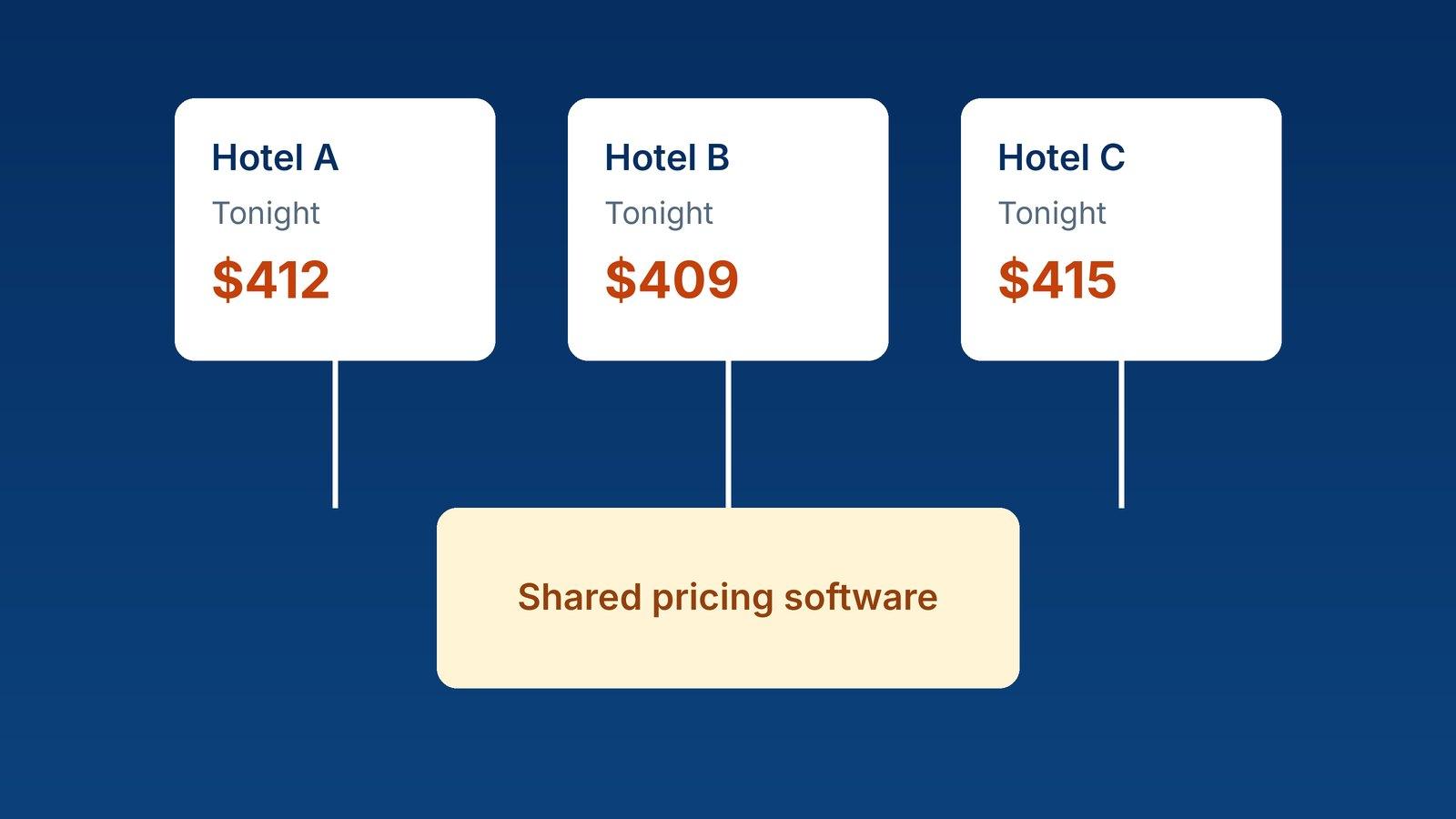
Search three competing hotels on the same block and the rates can look oddly close. Often that’s just competition: hotels watch each other’s public prices. But a wave of lawsuits claims something else was going on in some cities: rival hotels feeding their private data into the same pricing software and following its recommendations, so rates stayed high even when rooms sat empty.
None of these claims has been proven. But one federal appeals court has now let a case go forward, and the answer matters for anyone who books hotels. Here is where things stand, and what you can do as a traveler.
The short version
- Pricing software is normal. Many hotels use revenue management tools that adjust rates by demand.
- The lawsuits are about sharing. They allege competitors pooled non-public data in the same tool and followed its prices.
- Courts disagree. An appeals court revived the Atlantic City case in 2026; the Las Vegas case was dismissed for good.
- You can still shop around it: compare across areas, stay flexible, and book refundable so you can rebook.
How hotel pricing software works
Revenue management software recommends a room rate for each night. Cendyn, the company at the center of two of these cases, says its Guestrev product analyzes internal data, market supply and customer demand to give price recommendations based on data science algorithms. Hotels using these tools to respond to demand is ordinary dynamic pricing, the same idea we explain in what AI pricing really does.
The antitrust concern is narrower. If competing hotels each hand the same software their private data, and the software uses that pooled data to recommend everyone’s prices, the tool can act like a meeting room where rivals agree on rates without ever talking. In March 2024 the U.S. Justice Department, joined by the Federal Trade Commission, told a court that hotels cannot “use an algorithm to engage in practices that would be illegal if done by a real person.”
Atlantic City: revived on appeal
Guests sued Atlantic City casino hotels run by Caesars, MGM’s Borgata and Hard Rock, along with Cendyn. They allege the hotels used Cendyn’s Rainmaker software, which drew on each hotel’s non-public data and fed competitors’ data back into its recommendations, and that the hotels accepted its recommended prices about 90% of the time. They also allege room rates rose while occupancy fell. The appeals court counted that pattern among the signs that could point to coordination.
A federal judge in New Jersey dismissed the case in September 2024. On July 29, 2026, the U.S. Court of Appeals for the Third Circuit reversed that decision and sent the case back. The court said the complaint was “sufficient to support a finding” that the casino hotels conspired to fix prices, and that the hotels’ ability to override the software’s prices did not defeat the claim. That ruling lets the case proceed. It is not a finding that anyone broke the law.
Las Vegas: dismissed for good
A similar suit over Las Vegas Strip hotels, Gibson v. Cendyn Group, went the other way. A federal judge in Nevada dismissed it in May 2024, and the Ninth Circuit affirmed in August 2025, holding that the software licensing agreements did not restrain trade in hotel room rentals. That court noted its analysis might change if Cendyn had shared competing hotels’ confidential information, which is the kind of allegation the Third Circuit later relied on. The Supreme Court declined to hear the case in April 2026. When the suit was filed in 2023, MGM Resorts called the claims meritless and factually inaccurate.
The result is a split between federal appeals courts. Whether a case like this survives may depend on what exactly the plaintiffs can allege about data sharing, and on where the case is filed.
Other hotel cases
- Luxury hotels and CoStar. A suit against CoStar, whose STR unit collects hotel performance data, and luxury hotel operators was dismissed in August 2025 with permission to refile. The judge said the “key missing ingredient” was any claim that actual room prices were shared. The plaintiffs filed an amended complaint.
- Extended-stay hotels. In a case over IDeaS pricing software and several large chains, including Extended Stay America, Hilton, Hyatt, IHG, Choice, Wyndham and Sonesta, a federal court in California denied the software maker’s motion to dismiss on September 15, 2026. The hotels’ own motion was still pending.
All of these are allegations, and the companies have fought them in court.
What lawmakers have done
California went furthest. A law in effect since January 1, 2026 bars using or distributing a “common pricing algorithm,” one that uses competitor data to recommend or set prices, as part of an anticompetitive agreement, and makes these cases easier to bring. It isn’t limited to housing, so it can reach hotels. Most other state and city laws on pricing algorithms, including New York’s and Connecticut’s, cover rental housing only.
The closest federal example is also about housing. In November 2025, the Justice Department announced a settlement requiring apartment software maker RealPage to stop using competitors’ non-public data in its live pricing recommendations. It shows how regulators think about shared data, even though it doesn’t apply to hotels.
What you can do as a traveler
You can’t see what software a hotel uses. But shared pricing works best when every nearby option moves together, so the practical answer is to widen your options.
- Look one neighborhood over. Compare hotels outside the main cluster, and different types of stays, like smaller independent hotels or vacation rentals.
- Move your dates. Shifting a stay by a night or two can change the rate more than switching hotels.
- Book refundable, then recheck. If the price drops before your cancellation deadline, rebook at the lower rate.
- Compare totals. Since May 2025, U.S. hotels must show the total price, with mandatory fees like resort fees included. See our resort fees guide.
- Check the hotel’s own site. Member rates can beat the public rate. We compare options in book direct or through Expedia?
For families and groups
If you need several rooms, ask for a group rate. Group blocks are negotiated with the hotel rather than taken from the public rate on the screen, which gives you a say in the price. If you’re planning a family reunion, wedding or team trip, tell us about it. There is no planning fee for standard trips; suppliers pay us when you book.
Sources
- U.S. Court of Appeals for the Third Circuit, Cornish-Adebiyi v. Caesars Entertainment, No. 24-3006, July 29, 2026.
- Supreme Court of the United States, docket for Gibson v. Cendyn Group, No. 25-1109; AP via The Hill, Lawsuit: Vegas Strip resorts used vendor to fix hotel rates, 2023.
- U.S. Department of Justice, Justice Department and FTC file statement of interest in hotel room algorithmic price-fixing case, March 28, 2024; amicus brief in Gibson v. Cendyn, October 24, 2024.
- U.S. District Court for the Northern District of California, In re Extended Stay Hotel Antitrust Litigation; A&O Shearman, court dismisses price-fixing class action over hotel benchmarking.
- California Legislature, AB 325 (2025); Cleary Gottlieb, California’s antitrust law amendments kick in, targeting algorithmic pricing.
- U.S. Department of Justice, RealPage settlement, November 24, 2025; Cendyn, Guestrev; Federal Trade Commission, Rule on Unfair or Deceptive Fees FAQ.