
Surge Pricing on Vacation: Disney Lightning Lane, Uber at the Airport, and How to Pay Less
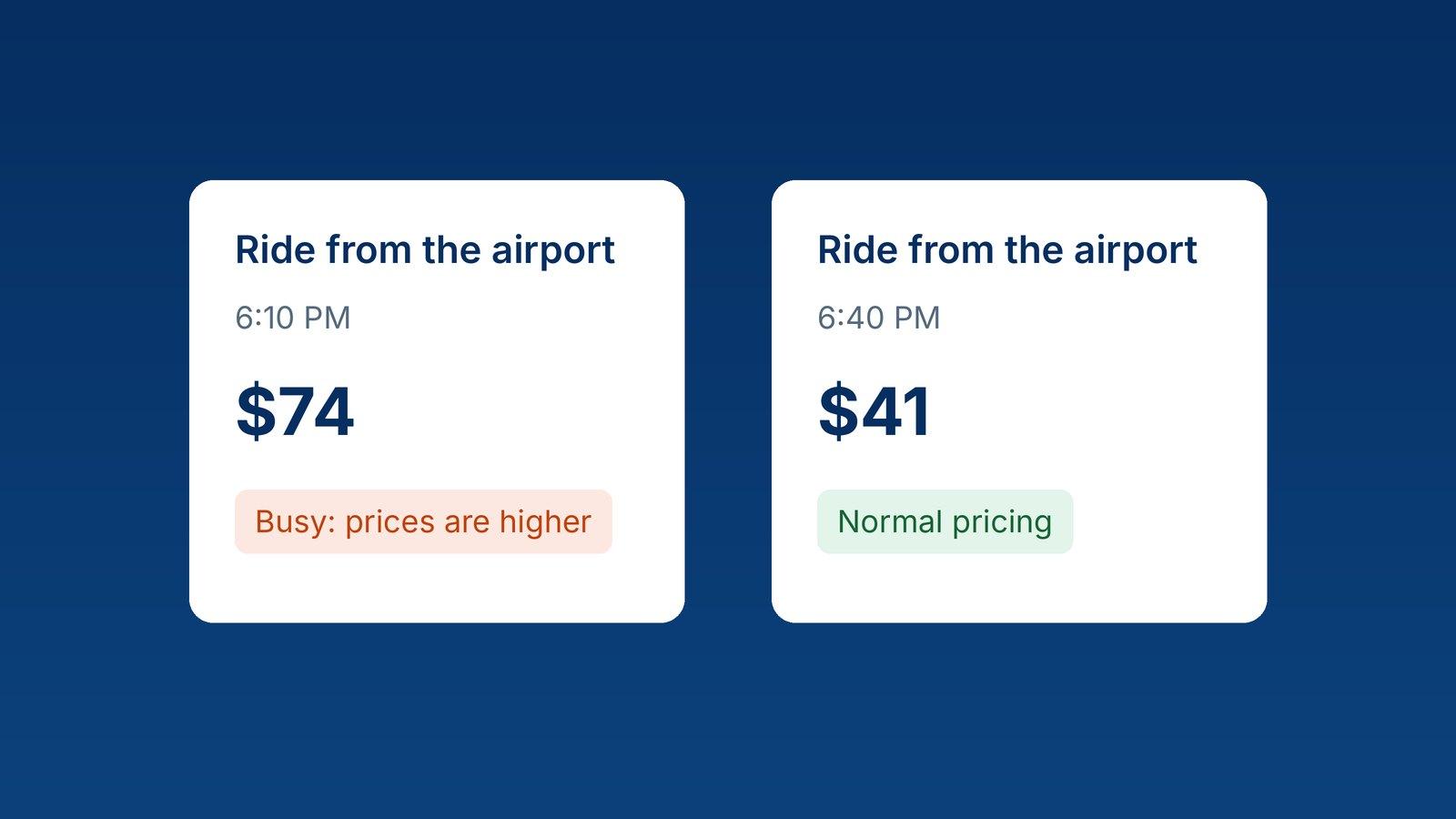
You land, open a rideshare app, and the fare into town is nearly double what you expected. A few days later, the same line-skipping pass at a theme park costs more than it did on Tuesday. Both are demand pricing: the price goes up when more people want the same thing at the same time.
Unlike the hidden pricing we covered in what AI pricing really does, these prices are shown to you before you pay. That means you can plan around them.
The short version
- Lightning Lane prices change by park and date. Disney says they may be higher during peak periods, including holidays.
- You can see Disney World prices 21 days out. Compare days, then buy only where a pass is worth it.
- Airport rideshare prices rise when riders outnumber drivers. Research suggests drivers sometimes go offline together to push surges up.
- The fix: check the price again in a few minutes, compare the taxi stand, or book ahead.
Disney Lightning Lane: how the pricing works
On July 24, 2024, Disney renamed its paid line-skipping options at both U.S. resorts. Genie+ became Lightning Lane Multi Pass, and individual Lightning Lanes became Lightning Lane Single Pass, sold one ride at a time. In October 2024 Disney added a higher-priced option, Lightning Lane Premier Pass, at Disneyland and at Walt Disney World, according to CBS News.
Walt Disney World says Multi Pass and Premier Pass prices vary by park and date, and Single Pass prices vary by attraction and date. It adds that prices may be higher during peak periods, including holidays. It doesn’t publish a starting price. Disneyland does: Multi Pass there starts at $35 per ticket per day, and Premier Pass prices vary by date and demand.
Premier Pass is the premium end. CBS reported launch prices at Walt Disney World of $129 to $449 per person per day plus tax, depending on park and date. In October 2026, Orlando station WKMG reported that Disney World raised the top Premier Pass price to $499.
How to pay less for Lightning Lane
- Price the days, not the trip. Walt Disney World shows Lightning Lane prices in the My Disney Experience app up to 21 days ahead. Compare each park and date before you decide.
- Buy only for the days that need it. A pass may be worth it on a holiday or a crowded park day and not on a quieter one.
- Know the buying window. At Walt Disney World, guests at Disney resort hotels can buy up to 7 days before their stay, and other guests up to 3 days before their visit. Sales open at 7:00 AM Eastern.
- Lock your park plan first. Disney World says passes are nonrefundable and nontransferable. You can change the park or date until you redeem your first selection.
- Watch the limits. Multi Pass allows up to 3 advance selections in one park, Single Pass up to 2 purchases a day, and Premier Pass is sold in limited quantities.
Uber at the airport: why the fare jumps
Uber says surge pricing goes into effect automatically when there are more riders in an area than available drivers. The app shows an upfront price before you book, and Uber lists demand on that route at that time as one of the things that sets it. Airports are a natural pinch point: a few big flights land at once, and everyone wants a ride in the same few minutes.
There’s also evidence that supply isn’t always what it seems. A 2020 study in Nature Communications used Washington’s Reagan National Airport as its reference case. Citing news reports, the authors describe drivers switching off their apps together to trigger surges, and their model shows why going offline can pay off for drivers, especially when riders have few alternatives. Their analysis of about 28 million Uber price estimates across 59 cities found similar patterns elsewhere. The authors are careful to say price data alone can’t prove that a shortage was artificial.
Surge pricing isn’t all bad for riders, either. A 2025 study in Econometrica found that, compared with a single fixed price, surge pricing left riders slightly better off on average across income levels, while drivers and Uber came out slightly behind.
In an emergency, there are limits. In 2014, Uber agreed with the New York Attorney General to cap prices during disasters and other abnormal market disruptions, and Uber’s own surge page says its team caps surge pricing in an area during major emergencies.
How to pay less for your airport ride
- Check, then check again. Surge prices follow demand, so the quote a few minutes after a big arrival wave can be lower. If you’re waiting for bags anyway, compare before and after.
- Compare another app. Different services can have different prices for the same trip at the same moment.
- Look at the taxi stand. Many airports have flat or zone fares. In New York, a yellow cab from JFK to Manhattan is a $70 flat fare plus surcharges, tolls and tip. In Las Vegas, taxis from Harry Reid International to the Strip are $22.25, $26.25 or $30.25 by zone, plus an airport fee and other charges.
- Book ahead for important rides. Uber says Reserve rides, booked up to 90 days ahead, come with locked-in rates and no surges. The price can still change if you add stops or change the route, cancellation fees are higher, and Uber doesn’t guarantee a driver will accept.
- Count the whole group. For a family or group, a larger vehicle or a pre-arranged transfer can cost less per person than two surge-priced cars.
For families and groups
Demand pricing adds up fastest when you’re paying for four or more people, on the busiest days, at the busiest times. Planning park days and airport transfers ahead takes most of the sting out. If you’re planning a Disney trip or a group getaway, tell us about it. There is no planning fee for standard trips; suppliers pay us when you book. For more on prices that change with the moment, see what “only 1 room left” really means.
Sources
- Walt Disney World, Lightning Lane passes cost FAQ and Lightning Lane passes; Disneyland, Lightning Lane passes cost FAQ; Disney Parks Blog, Plan ahead with Lightning Lane entry starting July 24, 2024.
- CBS News, Disney Lightning Lane Premier Pass, October 16, 2024; WKMG News 6, Walt Disney World raises prices, October 6, 2026.
- Uber, surge pricing, upfront pricing and Uber Reserve.
- Schröder, Storch, Marszal and Timme, Anomalous supply shortages from dynamic pricing in on-demand mobility, Nature Communications, 2020; Castillo, Who Benefits from Surge Pricing?, Econometrica, 2025.
- New York Attorney General, agreement with Uber to cap pricing during emergencies, July 8, 2014.
- NYC Taxi and Limousine Commission, taxi fares; Nevada Taxicab Authority, approximate fare information.