
How to Get a Table at a Fully Booked Michelin Restaurant
Most advice on this subject is folklore. Be charming on the phone. Slip the maître d' a hundred. Try Tuesday. Show up and look hopeful.
We went looking for what restaurants and booking platforms actually publish about how their systems work. Some of the popular advice turns out to be right for reasons people misunderstand, some of it is unsupported, and one common tactic is now illegal in a growing number of US jurisdictions.
Here is the evidence-based version, roughly in order of how much it helps.
First: make sure it is actually booked
Before anything else, check whether the date has been released at all.
Most high-demand restaurants do not open tables on a rolling basis. They release a month at a time on a fixed date and hour — Eleven Madison Park opens all of the following month on the 1st; The French Laundry drops on the 1st at 5:00 PM local. Booking platforms treat this as a setting, and Tock states plainly that publishing a schedule alone does not release reservations to the public.
So an empty calendar most often means the month has not dropped yet, not that the restaurant is full. A large share of "impossible" reservations are just badly timed attempts. Our guide to release times has the published schedules.
Use the platform's own Notify — and understand what it really is
Every major platform has one. Resy calls it Notify, OpenTable calls it Notify Me — a feature it launched in 2020 and whose usage it reported up 84% year over year — and Tock calls it Notify.
But the mechanics are not what most people picture, and this is the single most useful finding in this article.
It is not a queue, and it is not a lottery. Tock lets each restaurant choose between Auto Notify, which alerts matching guests automatically, and Manual Notify, where staff hand-select who gets told. You cannot see which mode a restaurant uses.
Resy's own restaurant-facing material spells out what happens under manual curation. A general manager describing a Notify list that can exceed 200 people on a Saturday says it gives him "a ton of flexibility" — he reviews the list and manually sends invitations, using guest profiles and prior-visit notes to build what Resy calls a dream guest list, nightly.
Which means the Notify list is partly a reputation system. The unglamorous version of "build a relationship with the restaurant" is: be a real, identifiable guest with a clean history and no no-shows, because a human may be reading your profile before deciding whether to send you the table.
Two mechanical details worth knowing:
Tock caps notifications at once per hour, twice per request, and states explicitly that an alert is not a guarantee or a hold — you still have to go and complete the booking. Resy is the same: getting the alert is not getting the table, and it is first-come on the alert.
More alerts do not help. At least one restaurant says so outright
The standard advice is to set as many Notify alerts as possible. At least one starred restaurant explicitly contradicts it.
Hayato in Los Angeles — one star, seven seats, a single seating per night — publishes probably the most transparent reservation policy in fine dining. Verbatim from its booking help page:
It saves ten reservations every month for first-time guests on the Notify list, going to those with the longest history of Notify requests. And: "Making multiple requests at the same time will not increase your chances."
Read that again, because it inverts the usual advice. Patience is the ranking factor, not volume. Hayato also limits guests to one reservation per month and cancels all reservations held by anyone booking more than that.
It is one restaurant, not an industry standard. But it is the clearest published statement anywhere of how these lists are weighted, and the direction of travel is unmistakable.
Check for a walk-in bar — but do not assume there is one
This is the highest-yield legitimate tactic, and it is verifiable restaurant by restaurant on their own pages.
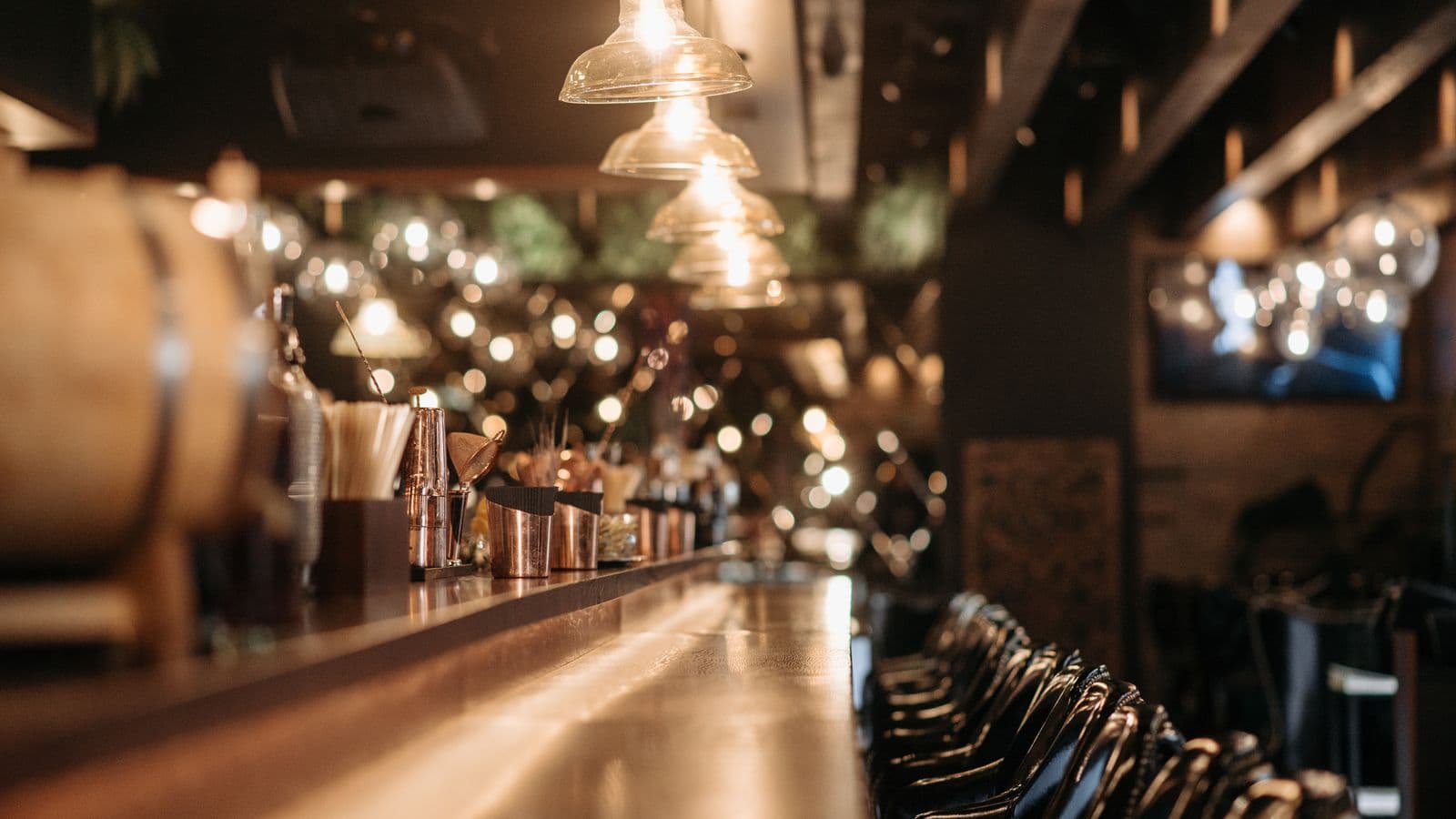
Gramercy Tavern takes dining room reservations 28 days ahead at noon — and states that the bar is available for walk-ins at all times. Eleven Madison Park says seats at the bar counter are first come, first served, for the bar tasting menu or à la carte. Barrafina's Dean Street site in London is walk-in only, maximum four guests.
Across New York more broadly, restaurants have described holding bar seats or a share of the dining room for walk-ins, often with a two-person cap, with the practical advice being to arrive at opening — 5 PM on weekdays, sometimes 4 PM at weekends.
The caveat that matters: this does not generalize. Single-seating ticketed rooms have no bar and no walk-in path at all. Hayato seats seven people once a night. The French Laundry is fully prepaid. There is no door to wait at.
So the tactic is not "there is always a bar seat." It is: open the restaurant's own reservations page and look for a bar, counter, or lounge carve-out. It is usually stated plainly, and it is usually missed.
Small parties fit the gaps — and that is geometry, not policy
Solo and two-person bookings do get seated more easily, but be clear about why: a single counter seat is the smallest unit of inventory a restaurant has, and a cancelled two-top leaves a gap that only a small party fits. Restaurants that hold bar seats for walk-ins frequently cap them at parties of two.
Solo dining is also rising sharply — OpenTable reported reservations for one up 23% year over year. That is context, not a promise. We could not find any restaurant policy or platform document stating that solo diners get priority. Treat it as a structural reality of table geometry, not a rule you can rely on.
The corollary matters for groups: if you are booking for six, the flexible-inventory tactics in this article mostly do not apply to you. Groups need the release-date approach, and they need it early.
Two pieces of common advice the evidence does not support
We went in expecting to confirm both of these. The evidence went the other way, so here it is.
"Prepaid restaurants release more cancellations to the public." The theory is that a restaurant holding your money wants to resell the seat. Three things argue against it. Tock cancellation requires staff to actively choose between making the slot available again or holding it — there is no automatic release. Eleven Madison Park states that all sales are final and non-refundable, so there is no refund and therefore no resale incentive. Hayato states that all reservations are non-transferable.
The opposite is closer to true: free-cancellation restaurants are where public cancellations actually surface, because the guest loses nothing by cancelling and the seat returns to inventory automatically. If you are hunting for last-minute openings, hunt on the no-deposit bookings.
"Book Tuesday or Wednesday, they are wide open." We could not verify this, and the available data runs against it. OpenTable has reported Wednesdays and Thursdays as its fastest-growing days by hour, and Thursday solo reservations up 25% year over year. Midweek is still less contested than 7:30 on a Saturday, but the gap is closing and there is no published data on starred-restaurant midweek availability specifically. Treat it as a mild preference, not a strategy.
The concierge route: what it costs and when it fails
Hotel concierges genuinely do get tables. What is worth understanding is the mechanism, because it is not a secret allocation.
Les Clefs d'Or — the concierges with golden keys on their lapels — is an international association dating to 1952 with strict membership standards: a minimum of five years in a hotel guest-facing role, the last two consecutive years holding the title of Concierge, direct employment by the hotel, working on-property at a lobby desk, and sponsorship from two senior members.
Those requirements mechanically produce something valuable: a person who has stood in the same lobby long enough that the restaurant's general manager knows their name and trusts that their guests show up. Given what we now know about how Notify lists are curated, that is exactly the currency that matters.
But nobody has a hidden inventory of three-star tables. We found no published document showing any concierge network, travel consortium, or card program holding restaurant allocations. Any advisor or hotel promising you a specific three-star table is overselling.
The one clearly documented card benefit is Global Dining Access by Resy, on American Express Platinum and several other cards. It includes Priority Notify — members are in the first group alerted when tables open, before other Resy users — plus some primetime tables held exclusively for members. That queue position is a real structural edge.
The human concierge is weaker than the marketing. A published hands-on test of the Amex concierge for Valentine's Day succeeded at one restaurant and failed at four of the hardest rooms in New York, with the agent conceding they would be difficult. Worth knowing before you pay an annual fee expecting magic.
Tokyo: the rule that changes the whole problem
Tokyo has a reputation as impossible, and it deserves a specific answer rather than a shrug.
Here is the fact that reframes it. Michelin removed Sukiyabashi Jiro and Sushi Saitō from its guide because they stopped accepting reservations from the general public. Michelin's stated policy is to introduce restaurants where everybody can go to eat.
Which means "Michelin-starred" and "introduction-only" are now close to mutually exclusive by Michelin's own rule. If a Tokyo restaurant is still in the guide, there is a public route in. The genuinely closed doors have already been delisted — so chasing Tokyo stars is a far more tractable problem than chasing Tokyo legends.
The routes that work for visitors: OMAKASE, an official partner of the Michelin Guide Japan with an English site and a traveler service; Pocket Concierge, owned by American Express since 2019, which offers waiting-list notifications; TableCheck for upscale and hotel restaurants; and your hotel concierge, which for some restaurants is the only route that exists. Sukiyabashi Jiro states on its own site that overseas guests can reserve only through the concierge of the hotel where they are staying.
Membership services do exist that claim access to regulars-only seats, typically for a per-seat fee — one charges ¥8,000 per seat, and its cancellation penalties run from 50% at eight to fourteen days out to 100% inside 48 hours. That claim of exclusive inventory is the vendor's, not independently verified, so go in with clear eyes.
What does not work — and what can get you banned
Reservation resale marketplaces. New York's Restaurant Reservation Anti-Piracy Act took effect February 17, 2025. It prohibits listing or selling reservations without a written agreement with the restaurant, with civil penalties up to $1,000 per violation per day, counted per restaurant listed — seven unauthorised listings is $7,000 a day of exposure. New York is no longer alone: Philadelphia's own ordinance took effect in April 2026 with penalties up to $1,000 per violation, and New Jersey banned the practice statewide on May 7, 2026, with penalties up to $500 per violation accruing daily. Illinois's statewide ban took effect January 1, 2026, with civil penalties up to $1,000 per violation. Louisiana has passed a ban of its own, and bills are moving in several more states — check where you are rather than assuming this is only a terms-of-service question. Platforms with restaurant agreements are exempt everywhere.
Bots and sniping scripts. Tock's terms prohibit robots, spiders, scripts, scrapers and crawlers outright, with an explicit warning about criminal liability under the Computer Fraud and Abuse Act. Its terms also state that unlawful resale is grounds for seizure and cancellation of that booking and any other booking you hold. Resy deactivates accounts, cancels reservations and runs a platform security team; its own data found bot and broker accounts no-show at four times the rate of normal diners.
Booking several slots and cancelling the extras. Actively harmful now. Hayato cancels all reservations held by anyone booking more than once a month. Platforms pattern-match this behavior precisely because it is what brokers do.
Tipping the maître d'. We found no restaurant policy, platform documentation, or credible reporting supporting this — only forum anecdote. It is also structurally impossible at ticketed single-seating rooms, where no host is allocating tables in the first place. Treat it as folklore.
"Just call and be charming." Not wrong, but unverified per restaurant, which is the actual failure mode. Barrafina states it cannot accept reservations by phone or email because card details are required. Gramercy Tavern takes calls from noon to 9 PM. Check first rather than assuming.
The short version
Confirm the date has actually been released before you conclude anything. Set the platform's own Notify and understand that a human may be curating it. Be a guest with a real profile and a clean history. Check the restaurant's own page for a walk-in bar or counter. Aim at shoulder hours and small parties, because that is where leftover inventory lives. Use a hotel whose concierge has standing with the room you want. And do not touch resale or bots — the downside is losing every reservation you hold.
Frequently asked questions
How do you get into a fully booked Michelin restaurant?
Check whether the month has been released, set the platform's Notify alert, look for a walk-in bar or counter on the restaurant's own page, consider a hotel with a well-connected concierge, and target shoulder hours and small party sizes.
Does Resy Notify actually work?
Yes, but it is often manually curated rather than automatic. Restaurant managers review the list and send invitations based on guest profiles and history. Setting more alerts does not help — at Hayato, longevity on the list is what counts, and it says so.
Can you buy a restaurant reservation?
Not legally in New York since February 2025, in Illinois since January 2026, in Philadelphia since April 2026, or in New Jersey since May 2026 — Louisiana has passed a ban too and more states are moving, so check where you live rather than assuming otherwise. Everywhere else it still violates platform terms: Tock states resale is grounds for cancelling that booking and every other booking you hold.
Is Amex Platinum worth it for restaurant reservations?
The documented benefit is Priority Notify through Global Dining Access by Resy, which puts you in the first alert group. That is real. The human concierge is much weaker than advertised — a published test failed at four of New York's hardest restaurants.
What about Tokyo?
More tractable than its reputation, because Michelin delists restaurants that refuse public reservations. If it is in the guide, there is a route in — usually OMAKASE, Pocket Concierge, TableCheck, or your hotel concierge.
Where we come in
We will not promise you a specific table, because nobody can.
What we do is put you in a hotel whose concierge actually has standing with the restaurants you want, track the release dates so someone is booking the moment inventory drops, sequence the trip around the reservations you land rather than the ones you hoped for, and line up a genuinely good alternative for the night a table does not come through — so the evening is still the one you remember.
Tell us which table you are chasing →
Platform mechanics, restaurant policies, and legislation described here reflect what was published as of August 2026 and change regularly. Nothing here should be read as legal advice.
Travel Connects is a Florida-based, full-service travel agency. FL Seller of Travel Reg. No. TI125330. CA Seller of Travel Reg. No. 2089491-50.
Related reading: How to Plan a Michelin Food Trip · How to Book a Michelin-Star Restaurant · How Much Does a Michelin-Star Dinner Cost?