
Mexico vs Caribbean Destination Weddings Compared (2026)
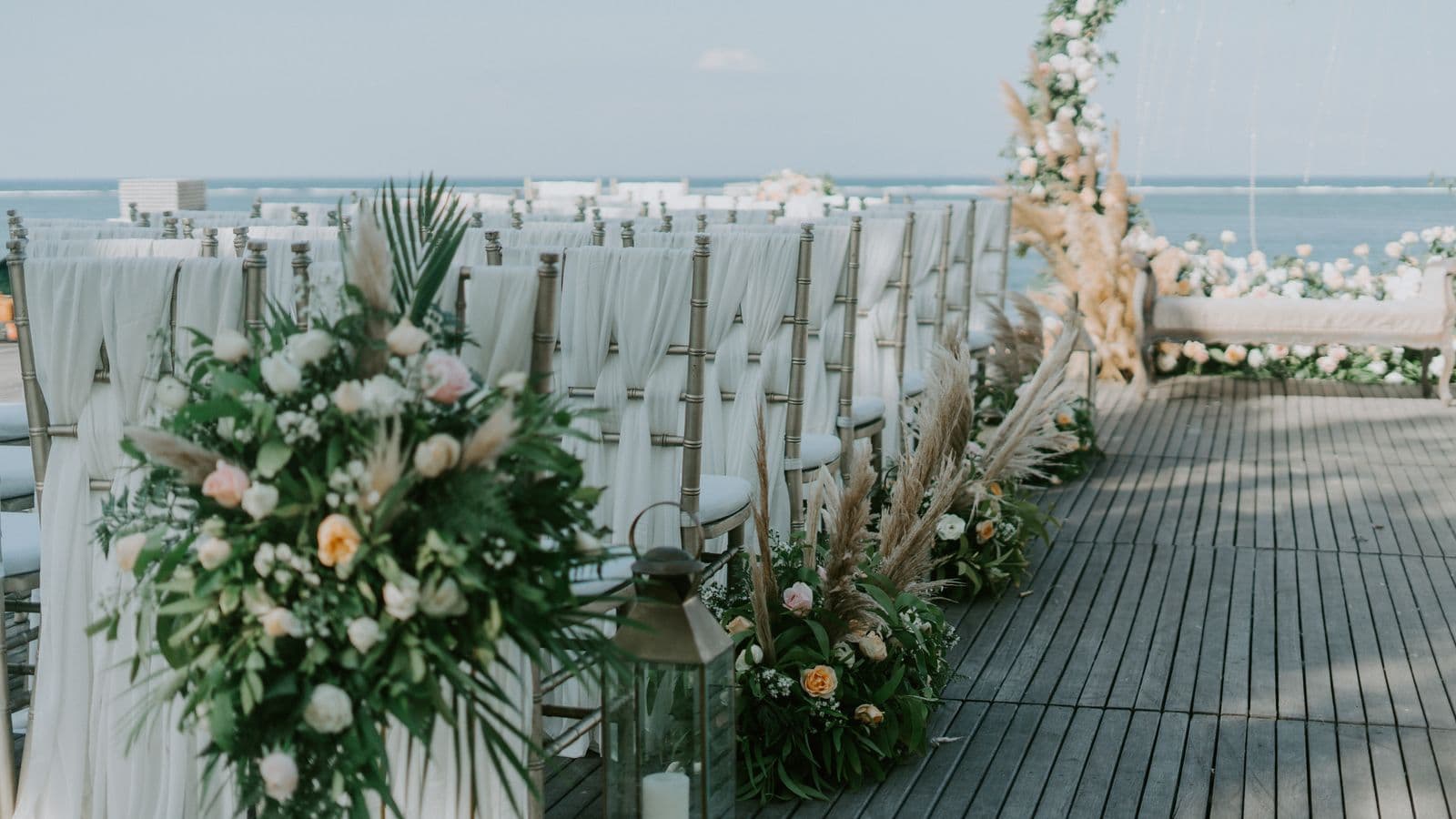
We've compared Mexico and the Caribbean as vacation destinations before. A wedding is a different decision. When 40 people have to get there on the same weekend, sign a group contract months in advance, and stand on a beach at 4pm in wedding attire, the variables that matter are different ones: marriage law, flight lift, transfer times, and two kinds of seasonal risk. That's this comparison.
One framing note up front: "the Caribbean" is not one place. Jamaica, the Dominican Republic, and the Bahamas behave very differently — on price and on paperwork — from Saint Lucia, Antigua, or Barbados. We'll split them where it matters.
Getting legally married: the paperwork gap
This is the comparison most blogs skip, and it's the one with the biggest practical difference.
Mexico only recognizes civil ceremonies performed by a registry official, and the paperwork is real: birth certificates apostilled and translated into Spanish by a Mexico-authorized translator, four witnesses with ID, and a ceremony conducted in Spanish. The registry fee itself is a published municipal charge — Playa del Carmen lists 65 UMA, about MX$7,625, for a marriage between foreign nationals — and apostilles, certified translations, and any required medical certificates stack on top.
The timing is the part that surprises couples. This is not a 3-days-early errand. Playa del Carmen's official procedure lists 20 business days to issue the certificate once your file is in — the registry's turnaround on the document, not a waiting period before the ceremony — and regional guidance is to request your registry appointment 60–90 days ahead of the date.
On the blood test: you will read that Mexico has dropped it. Be careful with that. In Quintana Roo the requirement is set at state level — the Reglamento del Registro Civil still lists a prenuptial medical certificate, and the Registro Civil is a state institution, so individual towns cannot repeal it on their own. What did change is narrower: in June 2025 Mexico's Supreme Court struck down the provisions requiring couples to disclose the results and treating illness as an impediment to marrying. Playa del Carmen's procedure page still lists the certificate, with blood type, VDRL and HIV results, valid 15 days. Practically that means enforcement can vary office to office while the rule stays on the books — so confirm with the specific registry that will marry you rather than trusting a blanket claim either way.
The practical result: the overwhelming majority of Mexico destination couples — by some planner accounts, effectively all of them — sign the legal paperwork at a courthouse at home and hold a symbolic ceremony at the resort. Guests can't tell, and nothing about the day changes.
The English-speaking Caribbean is the opposite story, because these islands built their marriage law for visitors:
| Destination | Wait after arrival | License cost (approx.) | Blood tests |
|---|---|---|---|
| Jamaica | As soon as 24 hours | ~US$40 (same-day process) | No |
| Bahamas | Apply after 24 hours | $120 | No |
| Saint Lucia | 24–48 hours | ~US$124–$200 | No |
| Antigua | Visitor "special license" | US$150 + ~$150 in fees | No |
| Dominican Republic | No wait, but heavy paperwork | $300–$600 ceremony + $150–$400 translations/apostilles | No |
| Mexico (civil) | ~20 business days processing; request the appointment 60–90 days out | 65 UMA (~MX$7,625) registry fee + apostilles & certified translations | Still required by Quintana Roo state rule; enforcement varies by registry office |
Note the Dominican Republic sits in the middle: no residency wait, but a Mexico-like apostille-and-translation burden, which is why many DR couples also go symbolic. If a legal ceremony abroad matters to you — some couples genuinely want the certificate to say Montego Bay — Jamaica, the Bahamas, and Saint Lucia are the easy buttons. If you're fine marrying legally at home first, this entire section stops mattering and the decision moves to logistics and price.
Flights: the variable that decides your RSVP rate
Your guests' airfare and routing determine who actually comes, and here the regions are not close to symmetric.
Cancun is the best-connected leisure airport in this hemisphere's tropics — nonstop service from 40+ US airports, with heavy low-cost competition (Spirit, Frontier, Sun Country, and 2026 Breeze additions) keeping average round-trip fares in the mid-$400s and deal fares well under that. Punta Cana and Montego Bay are the Caribbean's heavyweights, each with deep US nonstop networks and comparable fares.
The small islands are a different math. Saint Lucia's UVF has nonstop service from only around a half-dozen US gateways. Fewer routes means higher fares, more connections, and — this is the part couples underestimate — more guests who look at a $700 fare with a layover and quietly decline. If your guest list skews budget-sensitive or includes people flying from smaller cities, Cancun, Punta Cana, or Montego Bay will fill more seats at your reception than a boutique island will.
The transfer nobody warns you about
The flight is only leg one. Airport-to-resort transfer times vary more than most couples expect, and for a wedding group they're a real logistics line:
Punta Cana is the champion — most Bávaro and Cap Cana resorts are 15–25 minutes from the airport. Cancun's Hotel Zone is close, but the "Riviera Maya" on your resort's letterhead can mean 45–60 minutes to Playa del Carmen or roughly two hours to Tulum. Montego Bay-area resorts are minutes away, but Negril is 75–90 minutes on the coast road. Saint Lucia is the genuine outlier: the island is mountainous, the roads curve relentlessly, and the popular Rodney Bay resorts sit 75–90 minutes from the international airport — with a recommended 3.5-hour pre-flight departure on the way home. Beautiful island; brutal arrival day for a grandmother on a connecting flight.
What guests pay per night
The clearest public comparison is the All-Inclusive Price Index 2026 from All-Inclusive Guide, which sampled 235 resorts across 24 destinations in June 2026 and reported the median lowest advertised nightly rate for two people. Two caveats worth stating: it's an affiliate publisher rather than a research firm, and advertised rates aren't transacted rates — your group rate should come in under these. Use it for the gaps between destinations, not as a quote.
| Destination | Median all-inclusive rate (2 people/night, 2026) |
|---|---|
| Dominican Republic | ~$289 |
| Mexico | ~$296 (widest resort selection) |
| Jamaica | ~$302 |
| Bahamas | ~$315 |
| Saint Lucia | ~$372 |
| Aruba | ~$406 |
| Antigua | ~$600 |
| Barbados | ~$600 |
Mexico and the DR are the value leaders, and Mexico pairs that with the deepest resort inventory — more choices at every budget tier. The small islands run roughly 1.3–2x the Mexico/DR median. For a couple, that premium buys real things: quieter islands, more dramatic scenery, a certificate that says Saint Lucia. For 40 guests paying their own way, it's the difference between a $1,800 trip and a $3,000 one — which loops back to the guest-cost math from our destination wedding cost breakdown.
Weather risk: hurricanes and seaweed
Hurricane season is a shared problem. June through November covers both Mexico's Caribbean coast and most of the islands, and it is emphatically not theoretical. Hurricane Melissa made landfall in Jamaica on October 28, 2025 as a Category 5 — among the most intense Atlantic landfalls on record — killing 45 people and causing damage estimated at $12.2 billion, roughly 41% of Jamaica's GDP.
If you're considering Jamaica, this is not a "check with your agent" footnote — a meaningful share of the island's wedding inventory is still out of service, and the picture is changing month to month as properties come back.
We deliberately don't print reopening dates here. They move in both directions — properties have beaten their schedules and others have slipped — and a date that was right the morning we published it has been wrong by that afternoon. Any list you find, including one on this page, is a snapshot of someone else's Tuesday.
Check the chain, not a list. Each operator publishes its own Jamaica status and keeps it current: Sandals and Beaches, Royalton, and Hyatt Inclusive Collection for Breathless and Secrets Montego Bay. Bahia Principe renamed both of its Runaway Bay resorts — they are now Bahia Principe Explore Jamaica and Bahia Principe Escape Runaway Bay, so the older Grand and Luxury names you'll find elsewhere are out of date. Neither property page carries a status notice, yet both sit in the Hyatt Inclusive Collection portfolio that is closed into 2027. Jewel Grande Montego Bay is the clearest illustration of why you check the operator rather than the property. Its own site, jewelgrande.com, carries no status notice and still shows a booking button — while Hyatt Inclusive Collection, which lists Jewel Grande among its Montego Bay properties, says its Jamaica resorts have suspended normal operations and expects to resume in the first quarter of 2027. When a property's own marketing and its operator's status page disagree, the operator is the one to believe. That is the general rule anyway: if a property you want isn't clearly bookable on the chain's own site for your dates, treat that as your answer.
Two cautions worth carrying. Some trade coverage has printed the Sandals reopening dates transposed, so the chain's own site is the one to trust — and Jamaica's tourist-board reopening list has run behind the chains more than once. And a resort being open is not the same as a resort being ready: ask specifically whether the venues, spa and restaurants you are counting on are back in service, not just the rooms.
December through April is the clean weather window everywhere, which is why it's also peak pricing. The genuine hedge is the southern arc: Aruba, Curaçao, and Bonaire sit largely outside the main hurricane belt — though 2024's Hurricane Beryl, which struck Grenada in July, is a reminder that "outside the belt" is probability, not immunity. Travel insurance for guests is non-negotiable for any June–November date in either region.
Sargassum is mostly a Mexico problem. The seaweed season on the Riviera Maya runs roughly April through October, peaking June–August. 2026 was a heavy year, though not uniformly a record one: University of South Florida monitoring put the Gulf at a record high, while the Caribbean and Central West Atlantic came in second to 2025. Two big years back to back is the useful takeaway — plan around the season, not around any single year's forecast. Exposure varies sharply by geography: Tulum is consistently the worst-hit, while Isla Mujeres' Playa Norte, Cozumel's leeward side, and Cancun's north-facing Hotel Zone beaches hold up best. West-facing Caribbean beaches like Negril's Seven Mile Beach largely escape it; east-facing coasts, including parts of Punta Cana, can catch it in heavy years. Resorts fight it with daily raking and barriers, and every wedding department has terrace and rooftop venues as the plan B. But if a barefoot-on-pristine-sand ceremony photo is the non-negotiable and your date is in July, that argues for a Caribbean west coast — or a Mexican winter date.
The verdict, by couple
Pick Mexico (Cancun/Riviera Maya) if: your guest list is large or budget-diverse, you want the widest choice of wedding-department resorts at every price point, guests are flying from all over the US, and you're comfortable with a symbolic ceremony. It's the highest-attendance, lowest-friction option, and a December–April date sidesteps the seaweed question entirely.
Pick Jamaica or the Bahamas if: a legal ceremony abroad matters to you, you want easy lift for East Coast guests, and the 24-hour license rule appeals. One caveat specific to Jamaica right now: post-Melissa reopenings run into 2027, so check inventory before you commit to a date — the island's wedding capacity in 2026 is genuinely thinner than it was, and the properties that are open are absorbing the demand.
Pick Punta Cana if: you want the lowest nightly rates in the region and the shortest airport transfer anywhere — genuinely useful with older guests or a short trip window.
Pick a small island (Saint Lucia, Antigua, Aruba) if: your guest list is small and can absorb higher fares and rates, and scenery or hurricane-belt positioning outranks attendance percentage. A 20-person Saint Lucia wedding with the Pitons behind the ceremony is spectacular. A 60-person one is a logistics project.
Talk it through before you pick a region
The answer to "which is better" starts with your guest list, not the destination. Bring us your rough headcount and month, and we'll show you what each region does to your budget and your RSVP rate.
Schedule a free planning call →
Legal requirements, license fees, and entry rules change and vary by state and parish; figures above are current as of publication. Always confirm marriage requirements with your resort coordinator or the local registry for your specific date and municipality.
Travel Connects is a Florida-based, full-service travel agency. FL Seller of Travel Reg. No. TI125330. CA Seller of Travel Reg. No. 2089491-50.
Related reading: How Much Does a Destination Wedding Actually Cost? · Destination Wedding Travel Agent: What We Actually Do · All-Inclusive Resorts: Caribbean vs Mexico vs Hawaii