
Lost, Delayed or Damaged Luggage: What Airlines Owe You
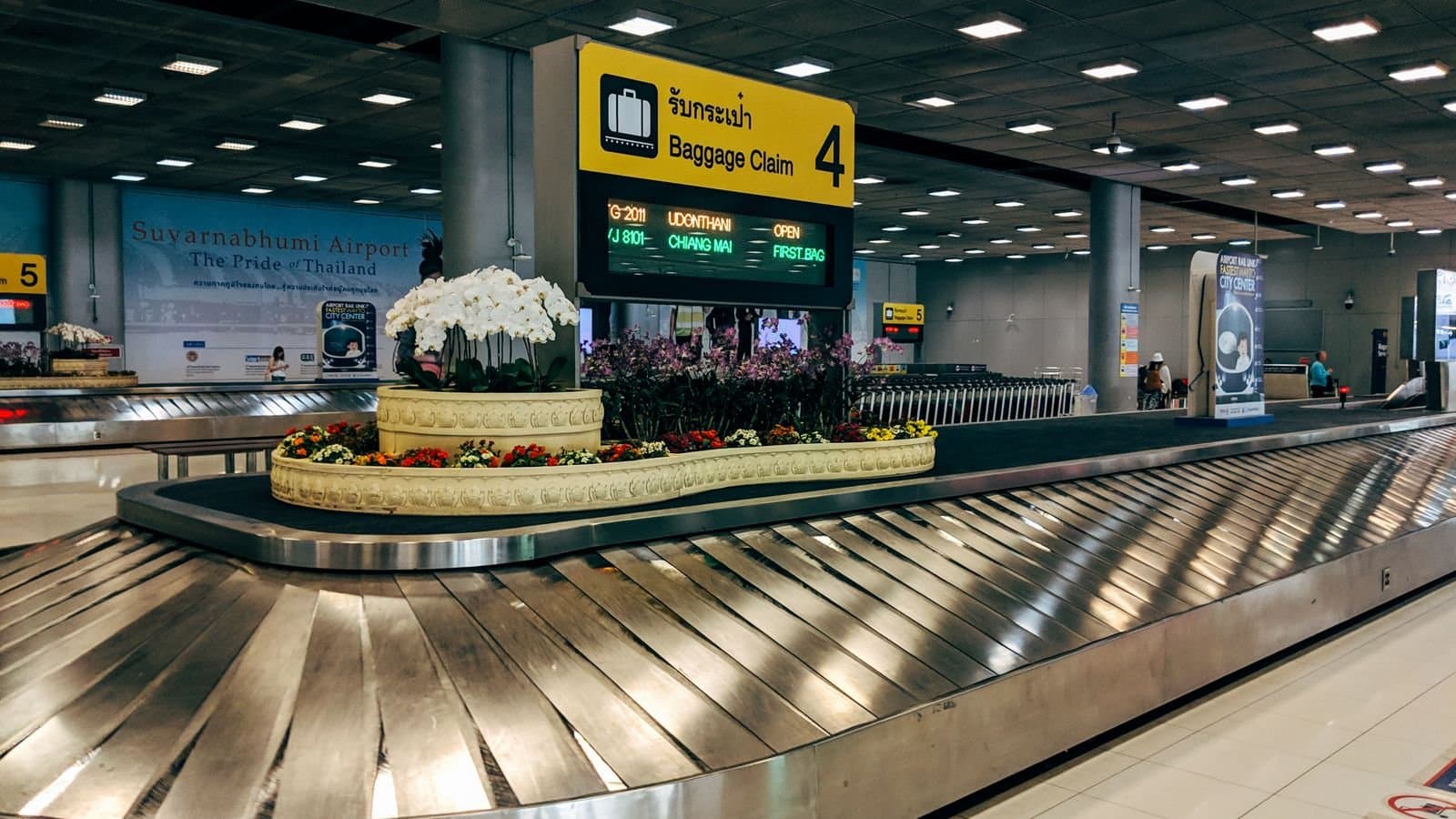
The large majority of checked bags arrive on time and in the shape they left in. When one doesn’t, you have more protection than most travelers realize. On flights within the U.S., Department of Transportation rules require airlines to compensate you for a lost, delayed or damaged bag. On international trips, treaties do the same job. The catch is that most of that protection depends on something you do at the airport, before you walk out the door.
Here is what airlines owe you, the numbers that cap it, and the handful of habits that keep you from needing any of it. Everything below comes from the Department of Transportation’s own guidance, which we read on October 21, 2026.
The short version
- Report a problem before you leave the airport, and get a written report from the airline. Almost every right below starts there.
- Delayed bag: the airline must cover reasonable, verifiable expenses while you wait. It cannot cap them at a flat daily amount.
- Bag-fee refund: automatic once you have filed a report and the bag is significantly late: 12 hours on a domestic flight, 15 or 30 hours on an international one.
- Lost bag: usually declared after five to fourteen days. You are owed the value of the contents, less depreciation and up to the limit, plus your bag fee back.
- Damaged bag: wheels, handles and straps count. Airlines cannot exclude them.
- Limits: $4,700 per passenger on domestic flights; about $2,175 on most international flights.
- Wheelchairs, CPAP machines and other assistive devices lost or damaged on a domestic flight are covered up to their original purchase price, with no $4,700 cap.
- Never check medicine, keys, your passport, valuables or anything irreplaceable. Keep them with you.
If your bag doesn’t come off the carousel
When a checked bag doesn’t arrive, finding it is the airline’s job. Airlines run tracking systems, and many now show a bag’s location in their apps, which is worth checking. But the step that matters is yours: file a baggage claim with the airline as soon as possible, at the baggage office, before you leave. Then stay in touch with the airline while they search.
While you wait, the airline must reimburse reasonable, verifiable and actual incidental expenses: the toiletries, the change of clothes, the things you genuinely need because your bag isn’t there. Keep every receipt. The DOT is specific that airlines may not set an arbitrary daily amount for these expenses; a policy of “up to $50 a day” isn’t allowed. The overall liability limits below still apply.
When a delayed bag becomes a lost bag
Each airline sets its own point at which a missing bag is officially lost, and it can depend on whether the trip was domestic or international and whether more than one airline was involved. According to the DOT, most airlines declare a bag lost between five and fourteen days after the flight. An airline that unreasonably refuses to call a bag lost after it has been missing for an unreasonable time can face DOT enforcement.
Once a bag is declared lost, the airline owes you for its contents, subject to depreciation and the liability limits, and must refund any fee you paid to check it. Expect to be asked for receipts or other proof for valuable items.
Getting your bag fee back
If you paid to check a bag and the airline loses it or significantly delays it, you are entitled to a refund of that fee. The DOT defines “significantly delayed” by the length of the flight:
| Flight | Significantly delayed if not delivered within |
|---|---|
| Domestic | 12 hours after the flight arrives |
| International, flight of 12 hours or less | 15 hours after the flight arrives |
| International, flight of more than 12 hours | 30 hours after the flight arrives |
The clock stops when you pick the bag up at the arrival airport or it is delivered to a place you and the airline agreed on. To get the refund you must file a mishandled baggage report; once it is on file and the delay crosses the threshold, the refund should be issued automatically.
There are three exceptions. The airline doesn’t owe the fee back if the bag was late because you didn’t collect and re-check it at your first point of entry into the U.S. on an international trip; because you didn’t pick up a bag that arrived on time at your ticketed destination; or because you agreed to travel without it, for example after a late check-in or on standby. Even then, an airline can’t make you waive your right to a refund if the bag is lost, or to reimbursement for expenses beyond the agreed delivery date. For the wider refund rules, see the DOT’s refunds page.
Damaged bags
Airlines are responsible for repairing or reimbursing damage to a bag or its contents that happens while the bag is in their hands, again up to the liability limits. They are not responsible for damage that was already there or that came from improper packing. If a bag can’t be repaired, the airline will negotiate compensation based on its value and depreciation.
Two details are worth knowing. First, airlines cannot exclude liability for damage to wheels, handles, straps and other parts of a checked bag, although they don’t have to cover normal wear and tear. Second, airlines often exclude categories of items, like electronics, fragile items, cash and other valuables, in their contracts of carriage. On domestic trips, those exclusions stand. On international trips, including the domestic leg of an international itinerary, an airline that accepted those items is responsible for them even if you didn’t declare them at check-in.
If your bag comes off the belt open, unlocked or visibly damaged, check the contents right there. Report any problem before you leave the airport and insist on a written report. Note the date and time and the name and phone number of the person you spoke with.
How much an airline has to pay
On domestic flights, DOT rules let airlines limit their liability for a lost, damaged or delayed bag to $4,700 per passenger. On most international flights, the Montreal Convention applies, with a limit of 1,519 Special Drawing Rights, which the DOT puts at approximately $2,175 per passenger. That limit is reviewed for inflation every five years. In the few cases where the Montreal Convention doesn’t apply, an older treaty, the Warsaw Convention, may. Airlines can pay more than these limits but don’t have to.
If you are traveling with anything worth more than that, the DOT suggests considering additional insurance for valuable items. Better still, don’t check it.
Wheelchairs, CPAPs and other assistive devices
Assistive devices get stronger protection. The DOT’s list includes crutches, canes and walkers; braces and prosthetics; wheelchairs; hearing aids; portable oxygen concentrators; CPAP machines; and prescription medications along with the devices needed to give them, such as syringes or auto-injectors. If you aren’t sure whether something qualifies, ask the airline’s disability or special-assistance desk.
On domestic flights, these devices are not subject to the $4,700 limit. The airline is liable up to the device’s original purchase price: lose or destroy a $20,000 wheelchair and it owes $20,000. On international flights, the treaty limit applies. And if a wheelchair or other device has to be taken apart to be stowed, the airline must return it in the condition it accepted it in, including repairs if it was damaged.
The other risk at the carousel: someone else taking your bag
Most baggage problems happen out of sight, between check-in and the belt. Airlines worldwide mishandled 24 million bags in 2025, according to the aviation technology company SITA, a figure that includes delayed, damaged, lost and stolen bags. But a recent case shows a bag can also go missing at the very end of the trip.
Yahoo Travel reported on October 20, 2026 that a traveler at Miami International Airport waited for a suitcase that never appeared, even though the airline’s scans showed it had arrived. A woman had taken it by mistake and returned it the next day. A lookalike bag left circling on the belt was then taken by a man who already had three suitcases on his cart; according to the traveler, its owner had an AirTag inside, and police tracked him down. A former TSA officer quoted in the story noted that at many U.S. airports, domestic baggage claim is open to the public, and nobody checks bag tags at the carousel.
The consumer advocate quoted in the same story called theft at baggage claim “relatively rare.” A lookalike bag taken by mistake is far more common. Either way, the fixes are the same:
- Go straight to baggage claim after you land, so your bag isn’t circling unattended.
- Make your bag easy to tell apart with a bright strap, ribbon or sticker, especially if it’s black and looks like everyone else’s.
- A tracker like an AirTag helps you find a bag, but if you think it was stolen, call the police rather than following the signal yourself. The advocate warned that people who have gone to the address on their own have put themselves in danger.
- If your bag will land before you, say after a missed connection, ask the gate agent to have it pulled and held in the airline’s baggage office, where an employee is watching it.
Before you fly: the habits that prevent most of this
The DOT’s own checklist is short, and most of it costs nothing:
- Carry on what you can’t do without: medicine, keys, passport, tour vouchers and business papers; cash, cards, jewelry and cameras; heirlooms; and fragile items like eyeglasses. Bags checked at the gate when overhead bins fill up count as checked, so keep these in your personal item.
- Label every checked bag with your name, phone number and email. Almost all delayed bags turn up eventually, and a label is how they find you.
- Don’t check in at the last minute. Even if you make the flight, your bag may not, and missing the airline’s check-in deadline can mean it won’t accept liability for a delayed or lost bag.
- Choose simpler routings when you can. From safest to riskiest for your bag: a nonstop flight; a direct flight with stops but no change of plane; a connection on the same airline; a connection between two airlines.
- Remove loose straps and hooks from garment bags before checking them; they catch in baggage machinery.
- Keep your bag-tag receipt for every bag until you have them all back. You may need it to leave the claim area, and you will need it for a report.
- Skip perishables in checked bags. A delayed bag can spoil them.
On a group trip, one missing bag is everyone’s afternoon
With a family or a group, a lost bag rarely stays one person’s problem: someone waits at the baggage office while everyone else waits for them. A few minutes before the trip saves a lot of that. Have each traveler photograph their bag and its tag receipt, give the bags something distinctive in common so the group can spot its own, and make sure everyone’s medications ride in carry-ons. If you're moving a group and want someone else tracking the details, tell us about the trip. There is no planning fee for standard trips; suppliers pay us when you book. For the seat side of flying, see which U.S. airlines have the most legroom.
Sources
- U.S. Department of Transportation, Lost, Delayed, or Damaged Baggage, read October 21, 2026.
- U.S. Department of Transportation, Refunds.
- Kaitlin Reilly, “Your suitcase could get stolen from baggage claim, experts say,” Yahoo Travel, October 20, 2026. SITA’s 2025 mishandled-baggage figure is as reported there.